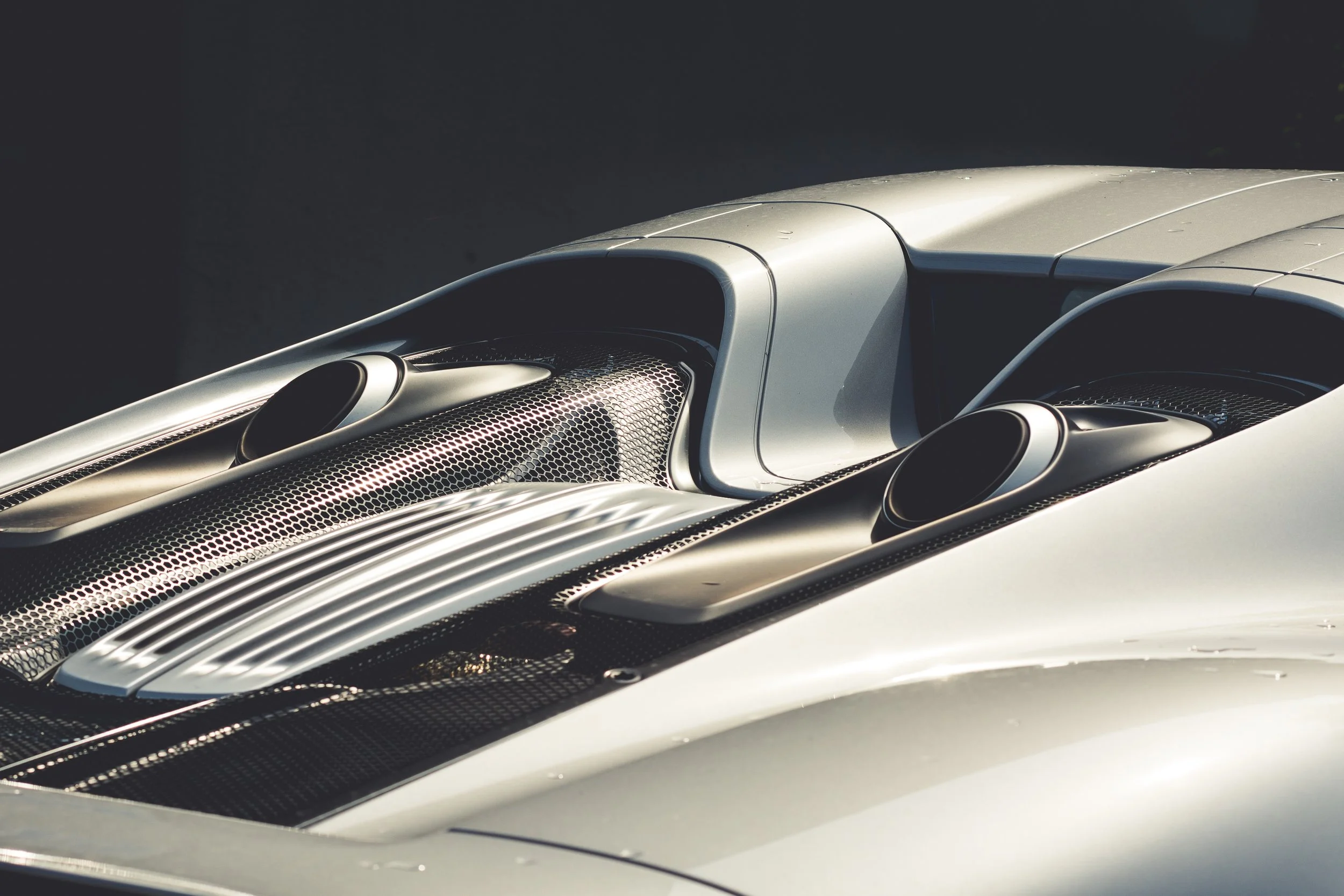
Porsche 918 Spyder: The Hybrid Hypercar That Changed Performance Cars
Disclosure: This article may contain affiliate links, referral links, sponsored links, sponsored placements, or display advertising. If you click a link, sign up, or buy through certain links, M3SV may earn a commission, advertising revenue, or referral reward at no additional cost to you. As an Amazon Associate I earn from qualifying purchases. Content on M3SV is for general informational purposes only and is not legal, financial, tax, investment, automotive, mechanical, safety, insurance, or professional advice.
Advertising Notice: M3SV may display advertisements through Google AdSense or other advertising networks. Third-party vendors, including Google, may use cookies or similar technologies to serve, personalize, and measure ads based on visits to this website and other websites. Readers should review M3SV’s Privacy Policy and Cookie Policy for more information about cookies, advertising, analytics, affiliate tracking, third-party services, and privacy choices.
Affiliate Notice: Some product links, automotive links, service links, book links, tool links, or buttons on this page may be affiliate links. M3SV may earn a commission from qualifying purchases, sign-ups, subscriptions, downloads, referrals, quote requests, or eligible actions. Affiliate relationships do not guarantee a positive review, ranking, recommendation, or mention. Readers should compare products and services, verify current pricing, review official product details, check platform terms, and decide what is best for their own needs.
The Porsche 918 Spyder Was More Than a Supercar
The Porsche 918 Spyder is one of the most important performance cars of the modern era.
It arrived at a time when hybrid technology was often associated with efficiency rather than excitement. Porsche changed that conversation. The 918 Spyder proved that electrification could make a performance car faster, sharper, more responsive, and more technologically advanced.
At its core, the 918 Spyder combined a naturally aspirated V8 engine with two electric motors, all-wheel drive, plug-in hybrid technology, and extreme lightweight construction. Porsche described the car as a performance hybrid built from the ground up with plug-in technology, designed to combine efficiency with serious dynamic capability.
The result was not just a fast car. It was a technological statement.
Before the 918 Spyder, many enthusiasts wondered whether hybrid systems would dilute the feel of a true sports car. After the 918 Spyder, the question changed. Instead of asking whether hybrid technology belonged in performance cars, the industry began asking how far electrified performance could go.
[ADSENSE AD PLACEMENT: Insert Google AdSense display ad here]
What Is the Porsche 918 Spyder?
The Porsche 918 Spyder is a limited-production plug-in hybrid hypercar developed by Porsche and introduced as one of the brand’s most advanced road cars.
Porsche gave the green light for series development in 2010 after the concept study debuted at the Geneva Motor Show. The production car later became part of Porsche’s long line of landmark performance models, following icons such as the 550 Spyder, 959, Carrera GT, and other important Porsche sports cars.
The 918 Spyder was designed as a mid-engine, all-wheel-drive hybrid super sports car. It used a high-revving 4.6-litre V8 engine paired with two electric motors. One electric motor worked at the rear axle, while another powered the front axle, giving the car a highly advanced all-wheel-drive system.
Only 918 units were produced, making the car rare by design. Porsche says the car was hand-built, with assembly alone taking around 100 hours for each vehicle.
[AFFILIATE LINK PLACEMENT: Insert approved Porsche history book, automotive reference, car collecting resource, or automotive education affiliate link here]
The Hybrid Powertrain Was the Star
The heart of the Porsche 918 Spyder is its hybrid powertrain.
Porsche’s official information lists the 918 Spyder with a total system output of 652 kW, or 887 horsepower. The system combines a 4.6-litre eight-cylinder engine producing 447 kW, or 608 horsepower, with two electric motors producing a combined 210 kW, or 286 horsepower.
That combination made the 918 Spyder extremely quick, but the numbers only tell part of the story.
The electric motors helped deliver instant torque, while the V8 provided high-revving character and dramatic sound. The front electric motor also allowed Porsche to create an advanced all-wheel-drive system that could improve traction and cornering behavior.
This was not hybrid technology added as an afterthought. The combustion engine and electric motors were integrated into the car’s entire performance strategy.
The 918 Spyder showed that electric power could improve acceleration, response, traction, and control without removing the emotional appeal of a naturally aspirated performance engine.
[AFFILIATE LINK PLACEMENT: Insert approved automotive technology, hybrid vehicle education, or performance car affiliate link here]
Performance That Still Feels Serious
The Porsche 918 Spyder’s performance remains impressive even years after production ended.
Porsche lists the 918 Spyder with a top speed of 345 km/h, or 214 mph, and a 0–100 km/h time of 2.6 seconds.
Those numbers put the car firmly in hypercar territory. But what made the 918 Spyder special was not just straight-line speed. It combined acceleration, braking, cornering, all-wheel-drive traction, electric torque, active aerodynamics, and lightweight construction into one complete package.
The 918 Spyder also had multiple driving modes, allowing the driver to move from electric driving to full performance use. Porsche described the car as capable of pure electric driving over 30 kilometres and also capable of a full race-track-focused configuration.
That flexibility was part of what made the car so groundbreaking. It could move quietly under electric power, then transform into a track-focused machine when the driver asked for full performance.
[AMAZON PRODUCT PLACEMENT: Insert Amazon affiliate Porsche book, model car, automotive poster, driving gloves, garage accessory, or car enthusiast product here]
The Nürburgring Record Made It Legendary
The Porsche 918 Spyder became even more famous because of what it achieved at the Nürburgring Nordschleife.
Porsche says the 918 Spyder became the first globally road-homologated production car to beat the seven-minute mark around the Nürburgring Nordschleife, recording a lap time of 6 minutes and 57 seconds.
That record mattered because the Nürburgring is one of the most respected performance benchmarks in the automotive world. It tests power, braking, aerodynamics, tires, suspension, stability, traction, cooling, and driver confidence over a long and demanding circuit.
The 918 Spyder’s lap showed that hybrid technology was not just useful in theory. It could deliver real-world track performance at the highest level.
Porsche later explained that the 918 Spyder beat the previous production-car record by 14 seconds and became the first production model from any manufacturer to lap the Nordschleife in under seven minutes.
For many enthusiasts, that moment secured the 918 Spyder’s place in automotive history.
[ADSENSE AD PLACEMENT: Insert mid-article Google AdSense ad here]
Lightweight Construction Made the Technology Work
Hybrid systems add complexity and weight, so Porsche had to make the 918 Spyder as light and efficient as possible.
The car used a carbon fibre monocoque and carbon fibre reinforced plastic body construction. Porsche says the 918 Spyder weighed less than 1,674 kg, while the optional Weissach Package reduced weight further to about 1,634 kg.
The Weissach Package was designed for buyers who wanted an even more performance-focused version of the car. It reduced weight through measures such as magnesium wheels and other lightweight components.
This matters because the 918 Spyder was not simply about adding electric motors to a fast car. Porsche had to balance power, weight, battery placement, cooling, aerodynamics, and handling.
The result was a hypercar that felt like a complete system rather than a collection of impressive parts.
[AMAZON PRODUCT PLACEMENT: Insert Amazon affiliate Porsche die-cast model, carbon fibre accessory, garage decor, car care product, or automotive collectible here]
The Design Still Looks Modern
The Porsche 918 Spyder has aged well because its design was shaped by function.
The low stance, wide body, removable roof panels, central exhaust outlets, active aerodynamics, and mid-engine proportions all helped create a car that looked futuristic without feeling overdesigned.
One of the most distinctive features is the top-exit exhaust system. The exhaust outlets sit above the engine area, giving the car a unique visual identity and helping manage heat.
The removable roof panels also gave the 918 Spyder a different personality from many fixed-roof hypercars. With the roof removed, drivers could experience the contrast between quiet electric driving and the sound of the naturally aspirated V8.
The 918 Spyder was dramatic, but it was still recognizably Porsche. It looked advanced without abandoning the brand’s performance identity.
[AFFILIATE LINK PLACEMENT: Insert approved automotive design, Porsche history, car culture, or enthusiast affiliate link here]
Why the 918 Spyder Matters Today
The Porsche 918 Spyder matters because it helped prove that electrification could belong in serious performance cars.
Today, hybrid and electric performance vehicles are much more common. High-performance cars increasingly use electric motors for faster acceleration, better torque control, improved traction, and greater efficiency.
The 918 Spyder helped move that idea into the mainstream performance conversation.
Porsche says the 918 Spyder influenced later Porsche sports cars and race cars, including the Porsche 963 LMDh prototype, which uses a version of the 4.6-litre engine architecture connected to the 918 Spyder.
That legacy makes the 918 Spyder more than a collector car. It is a bridge between traditional high-revving supercars and the electrified performance future.
[AFFILIATE LINK PLACEMENT: Insert approved automotive news, Porsche enthusiast, collector car, or performance vehicle affiliate link here]
Buying or Collecting a Porsche 918 Spyder
The Porsche 918 Spyder is no longer a normal new-car purchase. It is a rare collector-grade hypercar.
Porsche says only 918 were made, and because of that limited production, modern market prices can reach seven figures. Porsche noted that a low-mileage 2015 918 Spyder with the Weissach Package sold for $2.7 million at RM Sotheby’s Monterey Car Week auction in August 2025.
Anyone considering a 918 Spyder should approach the purchase carefully. A car like this involves more than the purchase price. Buyers may need to consider service history, battery condition, hybrid system maintenance, tires, insurance, storage, transportation, documentation, provenance, options, paint, mileage, and whether the car has the Weissach Package.
Rare performance cars can also involve market risk. Values may rise or fall depending on mileage, condition, demand, originality, color, options, ownership history, macroeconomic conditions, and collector trends.
A serious purchase should involve qualified professionals, proper inspection, official service records, insurance review, and legal or tax advice where appropriate.
[AFFILIATE LINK PLACEMENT: Insert approved collector car marketplace, vehicle history, insurance quote, appraisal, or automotive service affiliate link here]
Be Careful With Porsche 918 Spyder Claims Online
Because the Porsche 918 Spyder is rare, expensive, and highly desirable, information online should be checked carefully.
Listings, videos, social media posts, auction descriptions, and enthusiast discussions may contain incomplete or outdated details. Prices can change, ownership claims can be exaggerated, and vehicle condition can vary widely.
Before relying on any claim about a specific 918 Spyder, verify the source. Review official documentation, auction records, service records, chassis details, inspection reports, ownership history, and seller reputation.
Be cautious with listings that avoid important details, pressure buyers to move quickly, provide limited documentation, or refuse proper inspection.
With a car at this level, verification matters.
[ADSENSE AD PLACEMENT: Insert Google AdSense display ad here]
How M3SV Uses Ads, Amazon Links, and Affiliate Links
M3SV may earn money from this article and other automotive content through Google AdSense, Amazon Associates, affiliate programs, referral programs, sponsored links, display advertising, sponsored placements, and other monetization methods.
Display ads may appear on this page. These ads may be selected, delivered, measured, or personalized by third-party advertising providers. Ad providers may use cookies, pixels, device identifiers, or similar technologies to help serve and measure ads.
Affiliate links may also appear in automotive articles. If you click certain product links, service links, software links, collector car links, quote links, marketplace links, buttons, subscription links, download links, or referral links, M3SV may earn a commission or referral reward at no additional cost to you.
M3SV may participate in the Amazon Associates Program and other affiliate programs. As an Amazon Associate I earn from qualifying purchases.
Affiliate compensation does not guarantee a positive review, ranking, recommendation, or mention. M3SV aims to provide useful, transparent, reader-focused content. Readers should always compare options, verify current prices, read official product descriptions, review platform terms, check seller details, and decide what is best for their own needs.
A Simple Porsche 918 Spyder Research Plan
The Porsche 918 Spyder is the kind of car that rewards careful research.
Start with the basics. Learn the car’s history, production numbers, powertrain layout, hybrid system, performance figures, Weissach Package differences, and Nürburgring record.
Then compare examples. Look at mileage, service history, color, options, condition, documentation, ownership history, and whether the car has been stored, driven, serviced, or preserved.
Next, understand the costs. A 918 Spyder may require specialized service, insurance, battery-related inspection, secure storage, proper tires, transport, and expert maintenance.
Finally, avoid hype. The 918 Spyder is an incredible car, but every individual vehicle should be evaluated on its own condition, documentation, and history.
[FINAL AFFILIATE PLACEMENT: Insert final Amazon, affiliate, or referral link here]
Product and Service Disclaimer
Automotive products, vehicle listings, collector car services, prices, availability, specifications, warranties, service information, auction results, market values, insurance terms, financing terms, inspection results, and vehicle condition details can change without notice.
M3SV does not manufacture, sell, inspect, certify, insure, finance, repair, appraise, ship, store, or control third-party vehicles, automotive products, listings, auction platforms, marketplaces, insurers, lenders, retailers, manufacturers, or service providers mentioned on this website unless clearly stated otherwise. Purchases, subscriptions, refunds, cancellations, inspections, claims, quotes, returns, warranties, support requests, shipping issues, account problems, and service disputes are handled by the applicable retailer, manufacturer, mechanic, dealer, auction house, insurer, lender, platform, or service provider.
Readers should review official product pages, current prices, vehicle records, service history, seller details, warranty terms, inspection reports, insurance terms, privacy policies, and terms of service before making a purchase, booking a service, creating an account, or relying on any vehicle-related information.
Privacy and Cookies
M3SV respects reader privacy. This website may use cookies, analytics tools, advertising technologies, affiliate tracking links, embedded content, and third-party services to operate the site, measure performance, serve ads, support affiliate tracking, improve content, and maintain security.
Third-party vendors, including Google, may use cookies or similar technologies to serve ads based on prior visits to this website or other websites. Readers should review M3SV’s Privacy Policy and Cookie Policy for more information about cookies, advertising, analytics, affiliate tracking, third-party services, and privacy choices.
Do not send passwords, private keys, seed phrases, payment information, government identification numbers, driver’s licence information, insurance documents, vehicle ownership documents, confidential records, or sensitive personal information through public comments, forms, or emails.
External Links
This article may link to third-party websites, automotive platforms, auction houses, retailers, manufacturers, service providers, insurers, financing providers, affiliate partners, government resources, or other online resources.
Third-party websites are not controlled by M3SV. M3SV is not responsible for third-party content, pricing, availability, claims, warranties, fitment data, safety information, inspection results, vehicle listings, auction outcomes, insurance terms, financing terms, refund policies, privacy practices, cancellation terms, or terms of service.
External links are provided for convenience and informational purposes. Readers should review third-party terms, policies, pricing, compatibility information, and product details before relying on any information, making purchases, booking services, creating accounts, downloading software, or using services.
No Professional Advice
Automotive content on M3SV is provided for general informational and educational purposes only.
M3SV does not provide legal, financial, tax, investment, insurance, automotive, mechanical, technical, engineering, safety, repair, inspection, appraisal, collector car, medical, or professional advice. Readers should consult qualified professionals, certified mechanics, licensed insurers, official support channels, appraisers, legal advisors, tax advisors, or applicable authorities before making important decisions involving vehicle purchases, collector cars, inspections, maintenance, repairs, financing, warranties, insurance, taxes, modifications, safety issues, or legal matters.
Final Thoughts
The Porsche 918 Spyder remains one of the most important performance cars Porsche has ever built.
It combined a high-revving V8, electric motors, plug-in hybrid technology, all-wheel drive, carbon fibre construction, active aerodynamics, and record-breaking track performance into one landmark machine.
Its importance goes beyond speed. The 918 Spyder helped show that hybrid technology could make a sports car more exciting, not less. It proved that electrification could enhance performance, control, response, and efficiency while still preserving the emotion of a true Porsche hypercar.
For enthusiasts, collectors, and automotive fans, the 918 Spyder is more than a rare Porsche.
It is one of the cars that helped define the future of performance.
[FINAL CTA PLACEMENT: Insert final Amazon, affiliate, referral, newsletter, or related article link here]